On travelling home to Sheshegwaning First Nation, painting landscapes held by generations, and carrying those lessons into every story I paint.
By Heather LeBlanc
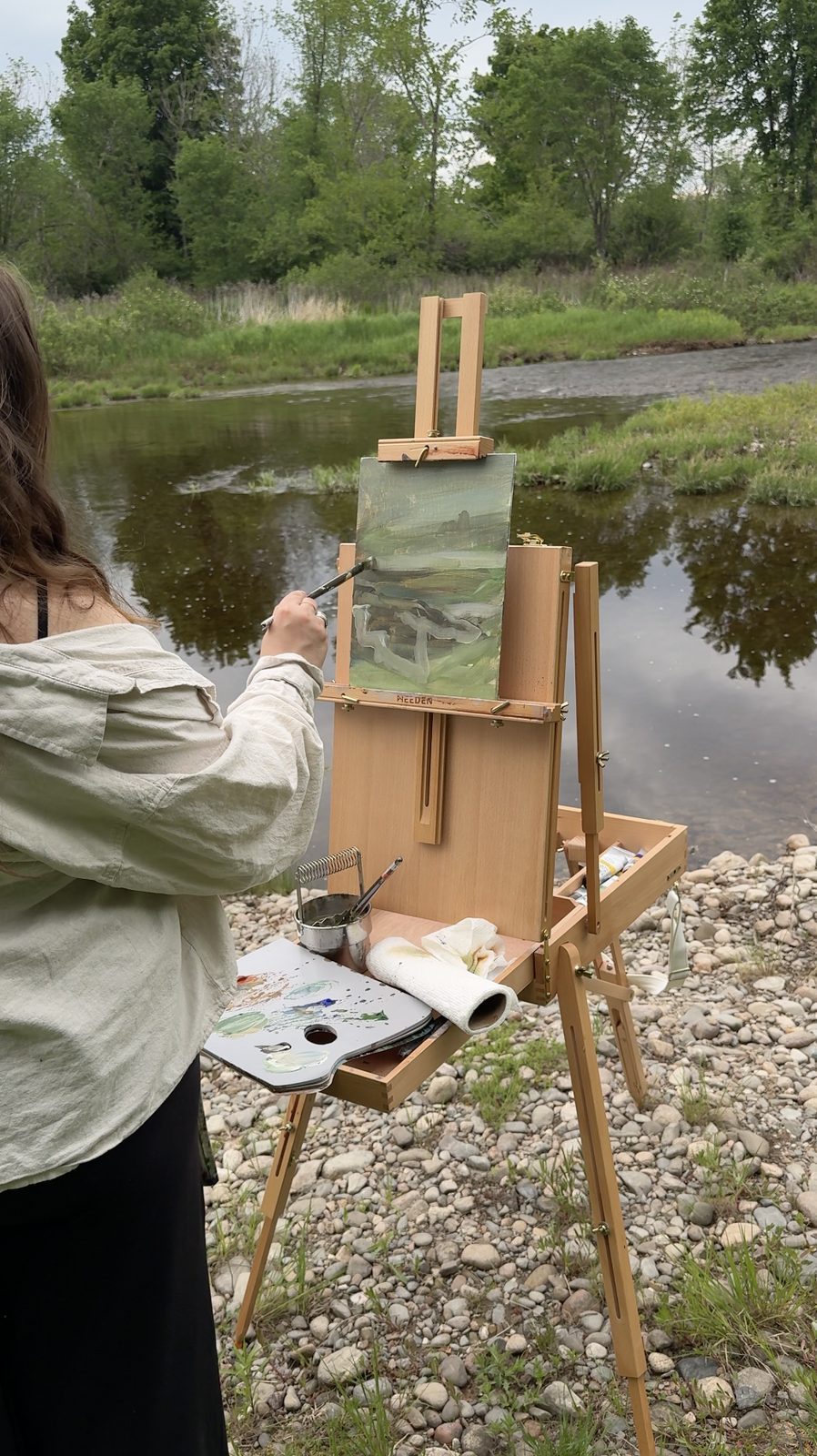
There is something about painting beside the water that asks you to slow down.
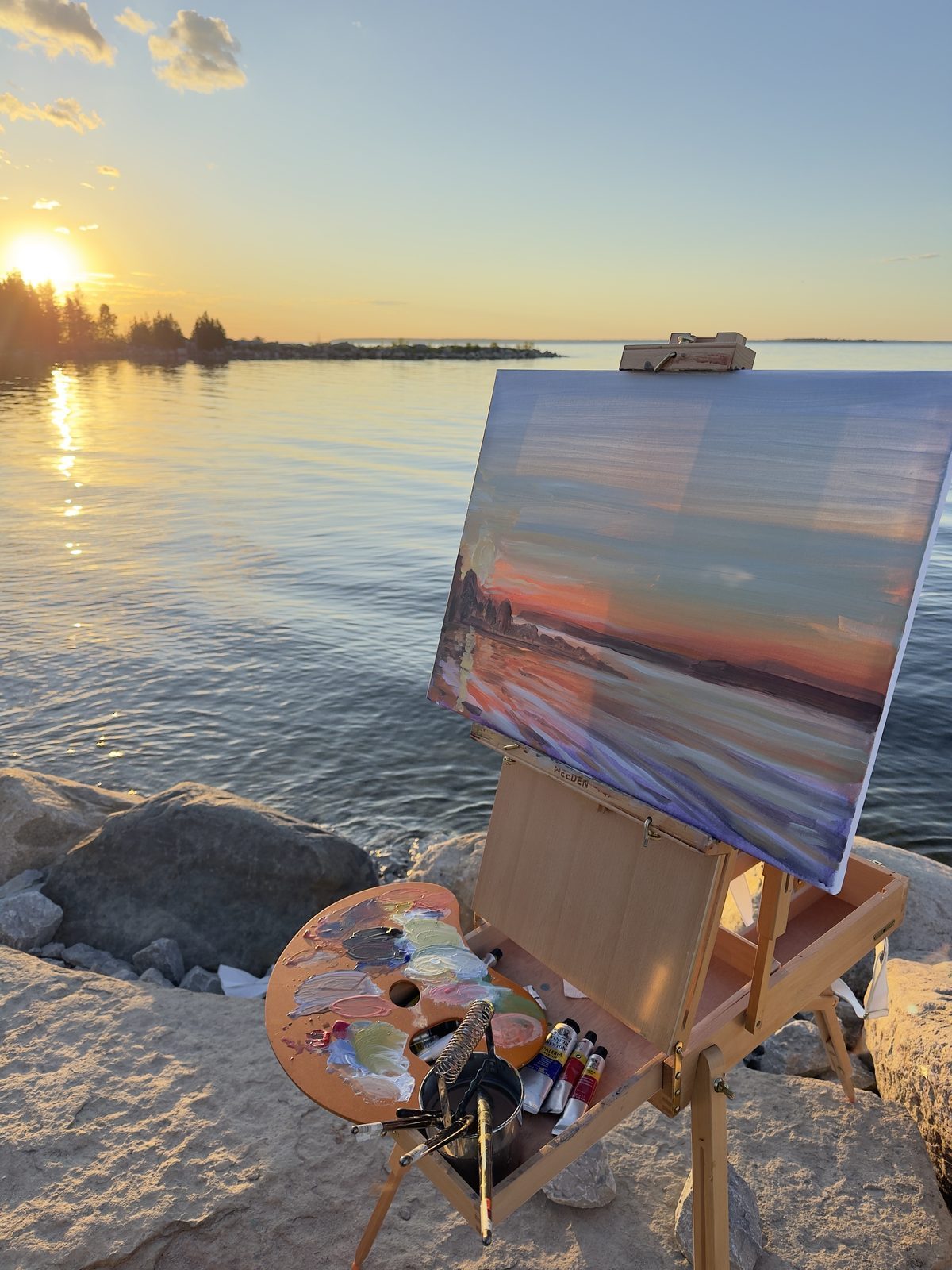
The light shifts before you have finished mixing the colour. Reflections appear and disappear. A shoreline that looked golden moments ago turns blue, then violet, then nearly silver. Painting outside means surrendering some control. It means paying attention to what is actually in front of you—not what you expected to see.
This is a practice I return to whenever I can, especially when travelling home to Sheshegwaning First Nation on Manitoulin Island, Ontario.
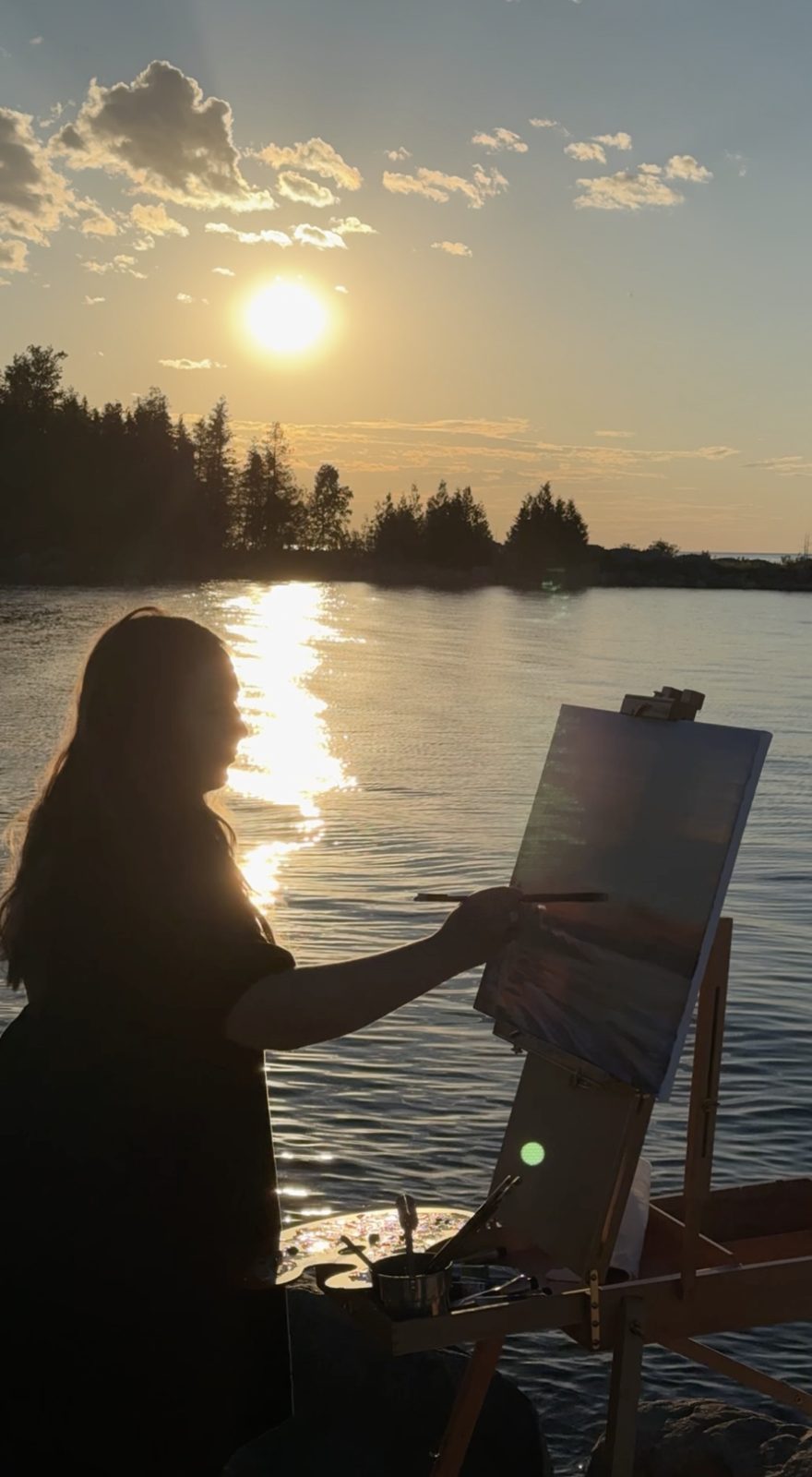
My family has known these shorelines for generations. When I stand at the water's edge with my easel, I am looking across landscapes they also witnessed: the movement of the water, the shape of the land, the changing sky. I often think about how many sunsets have passed over these same rocks and how many people before me have paused to watch them.
Manitoulin Island, at the water’s edge.Working while the light moves.
Painting there feels like observation, but it also feels like remembering.
I cannot hold the landscape still. I can only spend time with it, notice what it gives me and translate some small part of that experience into paint. The finished work becomes more than a record of a particular view. It holds the evening air, the rhythm of the shoreline and the feeling of being home.
My connection to water also lives within the name Flowing River. Flowing River—Bimitigweya—is one of my spirit names. It carries personal meaning for me and reflects the way I want to move through both life and my work: responsive, intuitive and willing to follow what feels true.
The lessons I learn while painting landscapes travel with me into every live wedding painting and commissioned piece I create.
A wedding day moves quickly, much like the light at the shoreline. The room changes as guests arrive. Expressions flicker across faces. Fabric catches the light differently from one moment to the next. I have to remain present, notice what matters and make decisions while the moment is still unfolding.
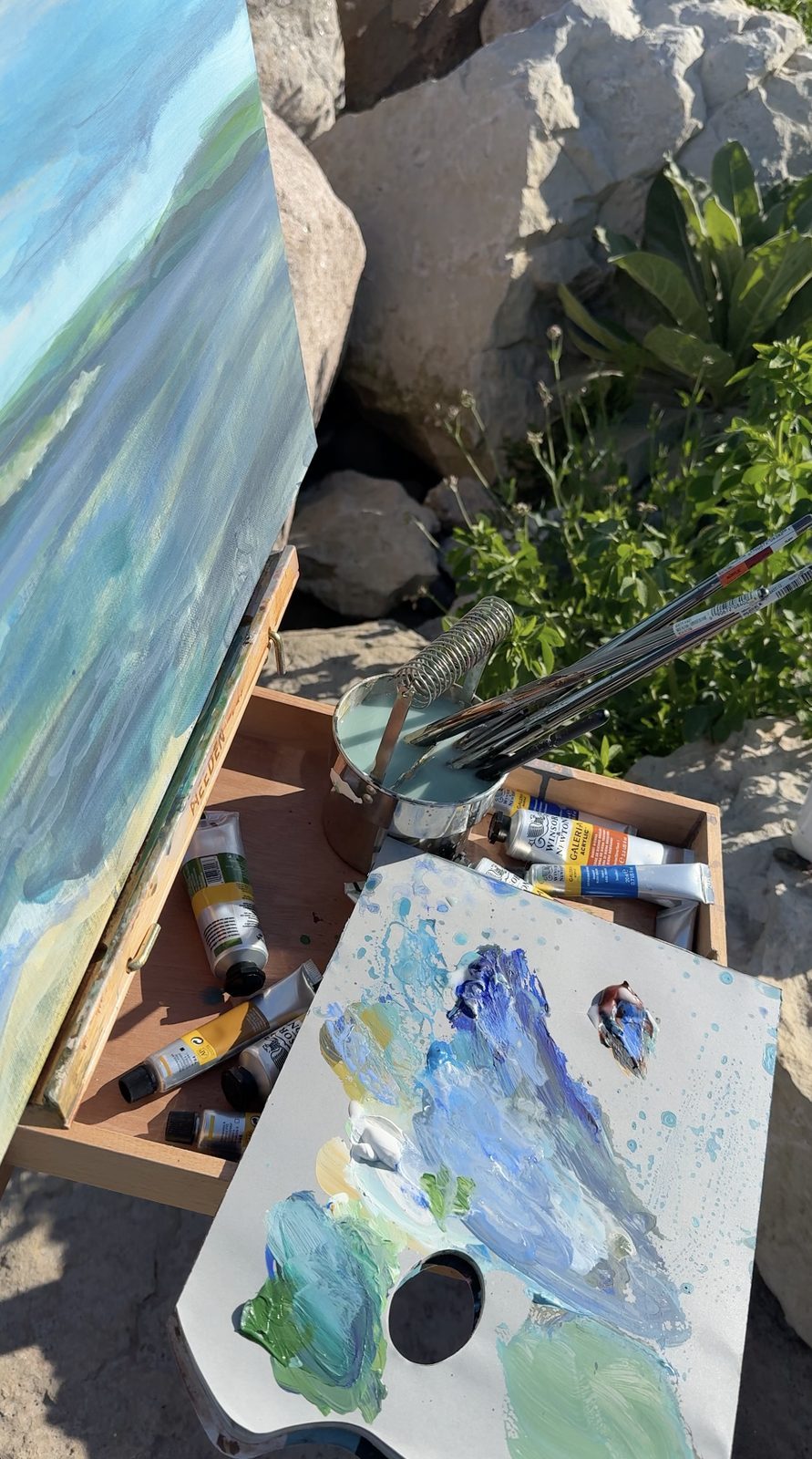
Mixing what the shoreline gives you.
When I paint from a photograph, the pace is different, but the intention remains. I look beyond the surface of the image for the feeling underneath it: the relationship between the people, the significance of the setting and the details that make the memory belong specifically to them.
Whether I am standing beside the water, painting in the middle of a wedding celebration or working quietly in my studio, I am always trying to preserve more than appearance. I want the painting to carry a sense of place. I want it to hold the atmosphere that surrounded a moment and the emotions that made it meaningful.
The landscape reminds me that no moment stays exactly as it was. Light moves. Water changes. People grow, and life continues forward.
But when we pause long enough to truly witness something, we can carry part of it with us.
That is what I hope to offer through every painting: not simply an image of what happened, but a way back to how it felt.